



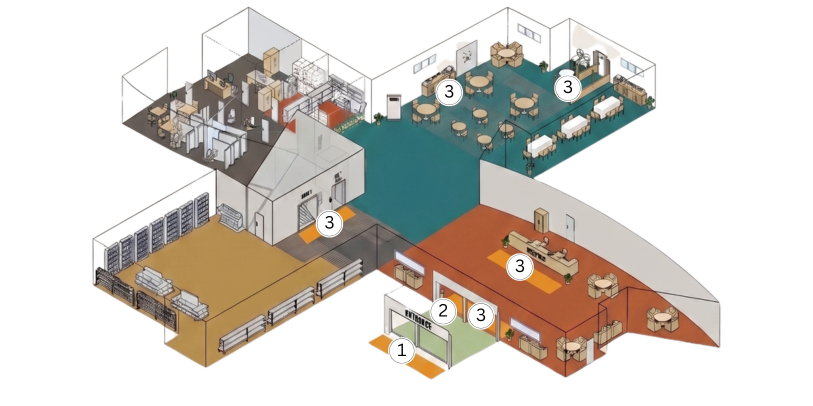
Most facilities have mats. Far fewer have the right mat, in the right place, doing the right job.
That distinction matters more than it might seem. A single high-traffic commercial entrance can deposit hundreds of pounds of soil into a building each year. Without a properly zoned matting system, that debris moves freely from the door to your floors, your HVAC filters, your hard surfaces, and ultimately your maintenance budget.
Mat zoning is the practice of matching the correct mat type to each specific area of your building based on traffic volume, contamination type, and function. It is one of the most cost-effective investments a facility can make, and one of the most overlooked.
Why Zoning Matters
A single mat at the front door is not a matting system. It is a gesture.
Research from the carpet and facility maintenance industry consistently shows that a properly layered, multi-zone mat system can capture up to 80% of tracked-in dirt and moisture before it reaches your building’s interior. The alternative, mopping, scrubbing, and replacing prematurely worn flooring costs significantly more over time than a well-specified mat program from the outset.
Beyond cost, there are real operational stakes: slip-and-fall liability, OSHA compliance in worker areas, brand impression in public-facing lobbies, and indoor air quality across your entire footprint.

The Four Zones
Zone 1 — Entryways
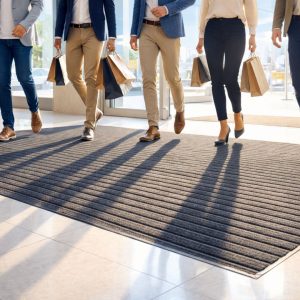
Zone 1 is your building’s first and most critical line of defense. WaterHog entrance mats with bi-level surface construction scrape and trap dirt, gravel, and moisture before they reach your interior floors. A correctly specified Zone 1 system eliminates up to 80% of tracked-in debris at the source — protecting every floor surface downstream.
What to look for: High-capacity fiber, rubber border containment, UV-stable construction for outdoor exposure. Size matters here — an undersized mat at a high-traffic entrance is nearly as ineffective as no mat at all. The general standard is enough mat for two full steps in each direction.
Recommended products: WaterHog Classic, WaterHog Fashion, heavy-duty scraper mats.
Zone 2 — Vestibule & Airlock
Zone 2 is the second critical interception point — the vestibule or airlock between your exterior entrance and your main interior. At this stage, the goal shifts from heavy scraping to capturing residual moisture and fine particulates that passed through Zone 1.
For high-security and high-traffic facilities, recessed grille mat systems offer an ADA-compliant, flush-mount solution that eliminates trip hazards entirely while meeting commercial and government specification requirements. These systems sit below finished floor level, creating a seamless transition from exterior to interior with zero raised edge.
What to look for: Wiper-scraper combination construction, compliance with applicable ADA and building codes, recessed mounting options for new construction or renovation projects.
Recommended products: WaterGuard, Recessed Grille Mat Systems, WaterHog High Definition Impression Logo Mats
Zone 2+3 — Lobby, Reception & Main Floor
Your lobby receives the highest concentration of foot traffic in the building. Custom logo mats handle the performance demands of Zone 2+3 while reinforcing your brand identity at the most visible point of entry — where every visitor’s first impression is formed.
This is also the zone where aesthetics and performance must work together without compromise. A lobby mat that looks professional but fails to perform after six months of use costs more than doing it right from the start.
What to look for: Durable face fiber construction rated for continuous heavy traffic, colorfastness over time, backing that will not slip or buckle on hard surfaces or carpet. Custom logo mats should be produced with precision color registration and edge finishing appropriate for your specific floor substrate.
Recommended products: Premium Plush Entrance Mats, Premium HD Impression Logo Mats
Zone 3 — Back of House, Offices & Service Areas
Interior zones are where mat programs most often have gaps. Break rooms, service corridors, commercial kitchens, loading docks, and standing workstations all have specific matting needs that a generic entrance mat cannot address.
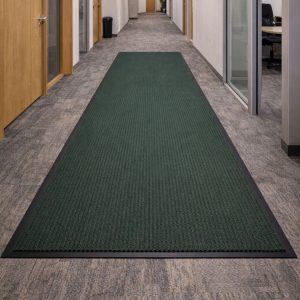
Anti-fatigue matting at standing workstations reduces worker fatigue and measurably lowers injury rates over time. Heavy-duty runners protect service corridors, commercial kitchens, and loading docks while extending the life of permanent flooring beneath — reducing replacement cycles, lowering maintenance costs, and keeping your operation running without interruption.
What to look for: Anti-fatigue ratings appropriate for shift length and workstation type, grease-resistant or chemical-resistant backing for kitchen and industrial areas, beveled edges to eliminate trip hazards in high-traffic corridors.
Recommended products: Anti-fatigue mats, interior runners, service area matting.
A Note on Sizing
Undersizing is the most common mistake in commercial mat specification. The instinct to order the smallest mat that fits a space is understandable from a budget perspective, but it defeats the purpose of the investment. A mat that does not give a person two full steps of coverage in each direction is not doing its job.
Work with a matting specialist who will measure your entrances, assess your traffic volume, and specify accordingly — not one who ships you a standard 3×5 and calls it a day.
The Business Case
Properly zoned matting programs deliver measurable returns in three areas:
Cleaning cost reduction. Less tracked-in debris means fewer labor hours spent mopping, scrubbing, and vacuuming. Studies in the facility management sector estimate that every dollar spent on entrance matting saves five to ten dollars in downstream cleaning costs.
Flooring longevity. Abrasive soil particles are the primary cause of premature wear on hard surface and carpet flooring. Removing them at the source — Zones 1 and 2 — protects the far more expensive permanent flooring throughout your facility.
Liability and safety. Slip-and-fall incidents are among the leading causes of injury claims in commercial facilities. A correctly specified mat system, properly maintained, meaningfully reduces this exposure.
Working With a Commercial Matting Specialist
Not all entrance matting is created equal, and not all vendors are equipped to specify a complete zoning program. When evaluating a commercial matting partner, ask whether they assess each zone individually, whether they can supply recessed systems for vestibule applications, whether they offer custom logo mat production with commercial-grade performance specifications, and whether they provide guidance on mat sizing, maintenance intervals, and replacement schedules.
The right partner does not just sell you a mat. They help you build a system.
Universal Floor Mats is a commercial entrance matting specialist serving government, hospitality, retail, and enterprise clients. Certified MDOT Minority Woman-Owned Business. Learn more at universalfloormats.com.